- October 9, 2026
- by admin
Beyond the Transcript: 6 Ways to Get More Value From Your Research Interviews
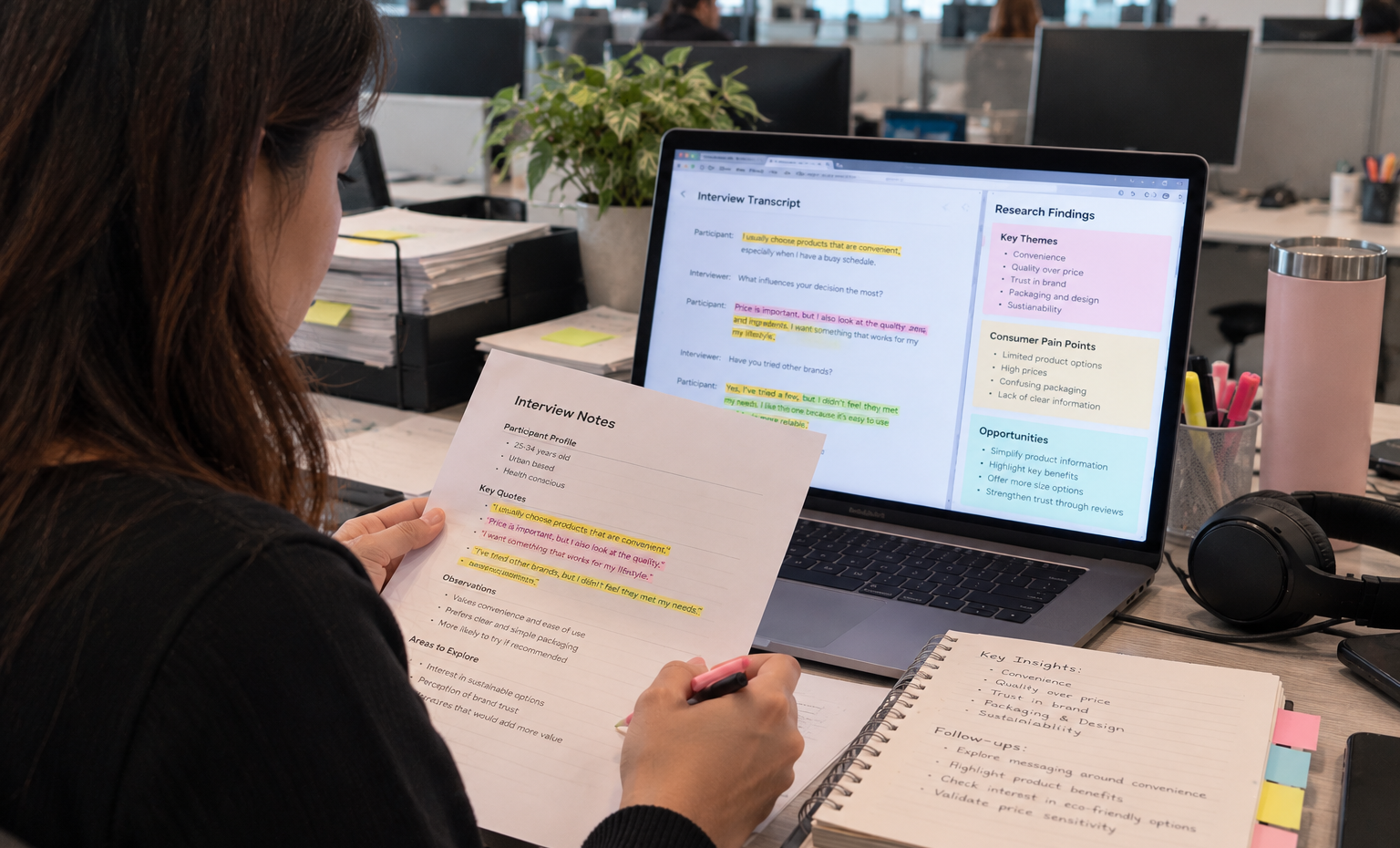
An interview transcript is more than a written record of a conversation. Used well, it can help research teams spot patterns, revisit important details, and uncover insights they might otherwise miss.
A good research interview can reveal a lot. A participant might explain why they prefer one product over another, describe a frustrating customer experience, or share a concern that never appeared in a survey.
But once the interview ends, another challenge begins: making sense of everything that was said.
Hours of recordings can quickly become difficult to manage. Important comments get buried in long conversations, different participants raise similar concerns in different ways, and researchers can spend more time searching through recordings than actually analysing the findings.
This is where transcription becomes particularly useful.
A well-prepared transcript gives researchers a searchable, reviewable record of what participants said. But having a transcript alone doesn’t guarantee better insights. The way you organise, review, and use it matters just as much.
Here are six practical ways to get more value from your research interviews.
1. Create a Research Question Checklist Before Transcription Begins
It’s tempting to wait until all the interviews have been transcribed before deciding what to look for. However, having a clear set of research questions from the beginning can make the entire process more organised.
Imagine you’re conducting interviews to understand why customers stop using a particular service.
You might want to identify:
These questions give your team a starting point when reviewing the transcripts.
They don’t mean you should ignore unexpected findings. In fact, some of the most interesting insights emerge when participants discuss something researchers didn’t anticipate.
Try this: Write down your main research questions before reviewing the transcripts. Use them as an initial guide, but remain open to new themes that emerge from the conversations.
2. Don’t Underestimate the Value of Timestamps
Imagine reading a transcript and finding a particularly interesting statement. You want to hear the participant’s exact words, understand their tone, or check the surrounding conversation.
Without timestamps, you may have to search through a lengthy recording to locate the relevant moment.
Timestamps make that process easier by connecting sections of written text to specific points in the audio or video.
This can be especially useful when researchers need to verify quotations, review unclear statements, or share selected excerpts with colleagues.
Try this: If you expect to revisit recordings during analysis, presentations, or reporting, consider requesting timestamps as part of your transcription requirements. Confirm the timestamp format and level of detail before the project begins.
The small amount of planning involved can save time throughout the research process.
3. Track Repeated Ideas, Not Just Repeated Words
One of the most common challenges in qualitative research is identifying patterns across multiple interviews.
However, participants don’t always describe the same experience using identical words.
For example, one customer might say, “The checkout took forever.”
Another might explain, “I nearly gave up because the payment page kept loading.”
A third might say, “I wasn’t sure whether my order had gone through.”
These comments use different wording, but they may point towards a shared issue: a frustrating checkout experience.
Searching for the word “checkout” alone might not reveal the full picture.
Try this: Develop a simple coding framework based on your research objectives. Group comments by the underlying issue or theme, and keep links to the relevant transcript passages so you can revisit the original context.
Remember that a pattern is a starting point for interpretation, not proof of how common an experience is across the wider population. Qualitative findings should be considered alongside the study design and other available evidence.
4. Preserve the Details That Make a Quote Meaningful
A participant’s statement can sound very different when removed from the conversation in which it was made.
Consider this comment:
“I wouldn’t use it again.”
On its own, it sounds like a clear rejection of a product. But what if the participant was referring to one specific feature, a temporary technical issue, or an experience that happened several years ago?
The surrounding discussion can change how the statement should be understood.
This is why accurate transcription and careful quote selection matter. Researchers need to preserve the participant’s meaning rather than choosing a sentence simply because it supports an expected conclusion.
Try this: Before including a quotation in a report or presentation, review the surrounding exchange in the recording. Check that the wording is accurate and that the quotation represents what the participant actually meant.
If you shorten a quote for readability, make sure the edit doesn’t change its meaning.
5. Keep Your Transcripts Organised From Day One
When a project involves only a few interviews, organising files may seem straightforward. As the number of participants grows, however, finding the right transcript can become surprisingly time-consuming.
Files with unclear names, inconsistent formatting, or missing participant references can slow down analysis and create unnecessary confusion.
The problem becomes more noticeable when several researchers are working on the same project.
Try this: Establish a consistent file-naming system before the interviews begin. For example, you could use a project code, participant ID, and interview date rather than a participant’s full name.
Keep a separate index that records the information your team needs to locate each file. Use approved storage and access controls, especially when transcripts contain personal or sensitive information.
A little organisation early on makes it easier to revisit findings, collaborate with colleagues, and maintain a clear record of your research.
6. Use Transcripts to Challenge Your Assumptions
Research teams often begin a project with an idea of what they expect to find. Perhaps customers are leaving because prices are too high, or employees are struggling because a process is too complicated.
The danger is that researchers may pay more attention to comments that support their initial expectations.
Transcripts provide an opportunity to slow down and examine what participants actually said, including comments that don’t fit the original theory.
For example, a team investigating price concerns might discover that customers are less worried about the cost itself and more frustrated by unclear billing information.
That distinction could lead to a very different business decision.
Try this: During analysis, create a separate category for unexpected findings or comments that challenge your initial assumptions. Ask yourself what evidence supports your interpretation and what alternative explanations might exist.
The aim isn’t to prove that your original idea was right. It’s to understand the evidence well enough to make a more informed decision.
A Transcript Is the Starting Point, Not the Final Answer
Research interviews contain valuable information, but that information doesn’t automatically turn into useful findings.
Researchers still need to compare responses, examine context, identify themes, question assumptions, and connect what participants say to the objectives of the study.
A clear, accurate transcript makes this work easier by providing a reliable foundation for analysis. Searchable text helps teams locate relevant passages, timestamps help them return to the original recording, and consistent formatting makes larger projects easier to manage.
Just as importantly, a transcript should support the researcher’s judgement rather than replace it. Automated tools can help speed up transcription, but names, technical terms, unclear speech, and important quotations may still require careful review.
The goal isn’t simply to produce a written version of every interview. It’s to make the information easier to work with while preserving the meaning of the original conversation.
At Transcribe and Translate, we understand the importance of reliable transcription in research workflows. Whether you’re handling customer interviews, focus groups, or multilingual research recordings, well-prepared transcripts can help your team spend less time searching through audio and more time understanding what the findings mean.
Working on your next research project? Before your next interview, think about how you’ll use the recording after the conversation ends. A few decisions about transcription format, timestamps, terminology, and file organisation can make the analysis stage much more manageable.
Transcribe and Translate: helping turn recorded conversations into accessible, usable research material.
